
.webp&w=48&q=75)
If your traffic looked strange last week, you weren't imagining it.
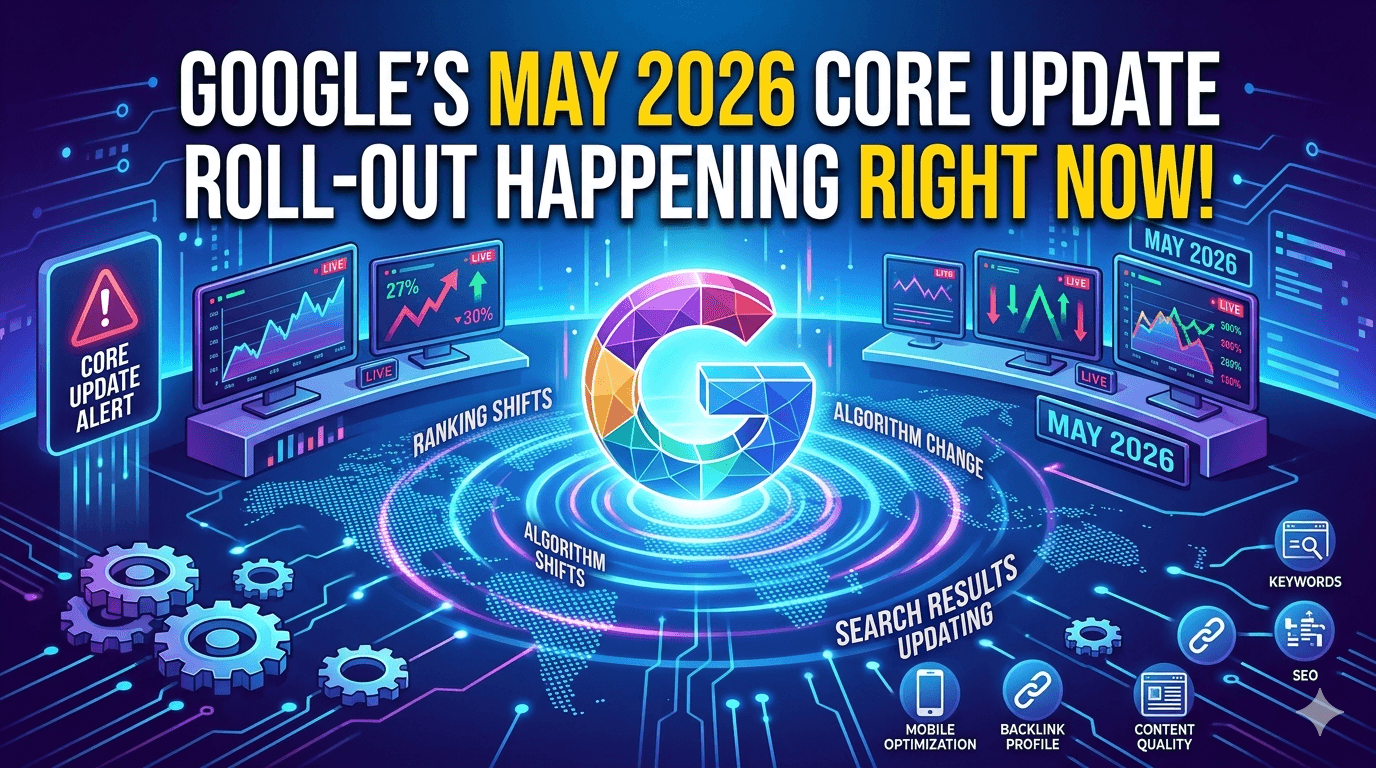
Google launched the May 2026 Core Update on May 21, making it the second broad core algorithm update of the year, following the March 2026 update that ran from March 27 to April 8.
The rollout window is up to two weeks, putting completion somewhere between June 4 and June 10, and it is a global update affecting all regions and all languages.
What makes this one worth paying close attention to is the context it landed in.
The May update started rolling out one day after Google I/O wrapped its AI Search overhaul, and only 43 days after the March update completed.
For context, there were over seven weeks between the December 2025 Core Update and the February 2026 Discover Update.
Google's algorithm development velocity has increased, and anyone still treating SEO as an episodic reaction business, optimize once then coast, is going to feel that gap widen every quarter.
This update also follows weeks of visible ranking volatility that led many SEO professionals to suspect changes were already underway before the formal announcement. The formal rollout confirmed what practitioners were already seeing in their data.
Many webmasters and digital marketers reported significant ranking changes starting late Friday, continuing through the weekend, with one user reporting a 50% traffic drop while others experienced unexpected surges or stability.
Independent tracking tools including Ahrefs and Semrush found 20 to 35% traffic drops in week one across affected sites, with some sections losing over 50%. Affiliate and templated pages have fallen hardest, with drops reaching 71% in early observations.
The pattern emerging from community data is consistent with what March 2026 established. The first 24 hours suggest this update is a continuation of the E-E-A-T and first-party content directional signals from March 2026, not a reversal. Sites built on thin content, AI-generated filler, and templated SEO copy are the ones feeling it hardest. Sites built around genuine expertise and original content are largely holding or gaining.
Not much, deliberately. Google's official description states: "This is a regular update designed to better surface relevant, satisfying content for searchers from all types of sites."
Google has not confirmed which content types are being rewarded, which are losing visibility, or the specific quality signals being adjusted. Every detailed "winners and losers" breakdown circulating right now is informed speculation at best. That's worth remembering before making reactive decisions based on week-one commentary.
A core update is not a penalty system. Sites that lose rankings haven't necessarily done anything wrong. It means Google has shifted the weighting of its evaluation signals and other content is now rated as more relevant.
E-E-A-T is increasingly determining rankings, with institutional sources and established brands benefiting from higher citability in AI Overviews. Zero-click rates are rising, and many aggregators and interchangeable content sites are experiencing significant drops in reach.
With Google's most recent update, roughly 80% of top results have transitioned away from aggregated results toward branded and official websites. That shift has real commercial implications for any site that built its visibility on aggregating, repurposing, or lightly editorialising other people's content.
The bottom line on what to expect: only brands and websites willing to invest meaningfully in original thinking, trustworthy content, and real expertise will come out as winners. That has been Google's direction for two years. This update accelerates it.
Don't make reactive content changes based on week-one ranking movements.
Google's own recommendation is to wait at least one full week after the rollout completes before reviewing Search Console data, using the weeks before May 21 as your baseline compared against performance after completion.
Don't panic-publish new content trying to recover lost positions. Don't delete pages based on early traffic dips.
And don't trust anyone selling you a guaranteed recovery service based on data that won't be reliable until the rollout stabilises around June 4.
I've been through enough of these to know the difference between businesses that come out of core updates stronger and those that spend three months chasing their tails.
The ones that come out stronger aren't the ones who react fastest. They're the ones who already had the right infrastructure in place, content built around genuine expertise, technical SEO that doesn't cut corners, and a search strategy that accounts for both traditional ranking and AI visibility.
That's the work I do with businesses, building the content architecture, technical foundations, and AI search visibility frameworks that hold their ground through updates like this and gain ground after them.
If your rankings took a hit this week and you want a straight assessment of why and what it will take to recover properly, not a quick fix that creates the next problem, reach out directly.

.webp&w=32&q=75) 19 Aug 2026
19 Aug 2026