
.webp&w=48&q=75)
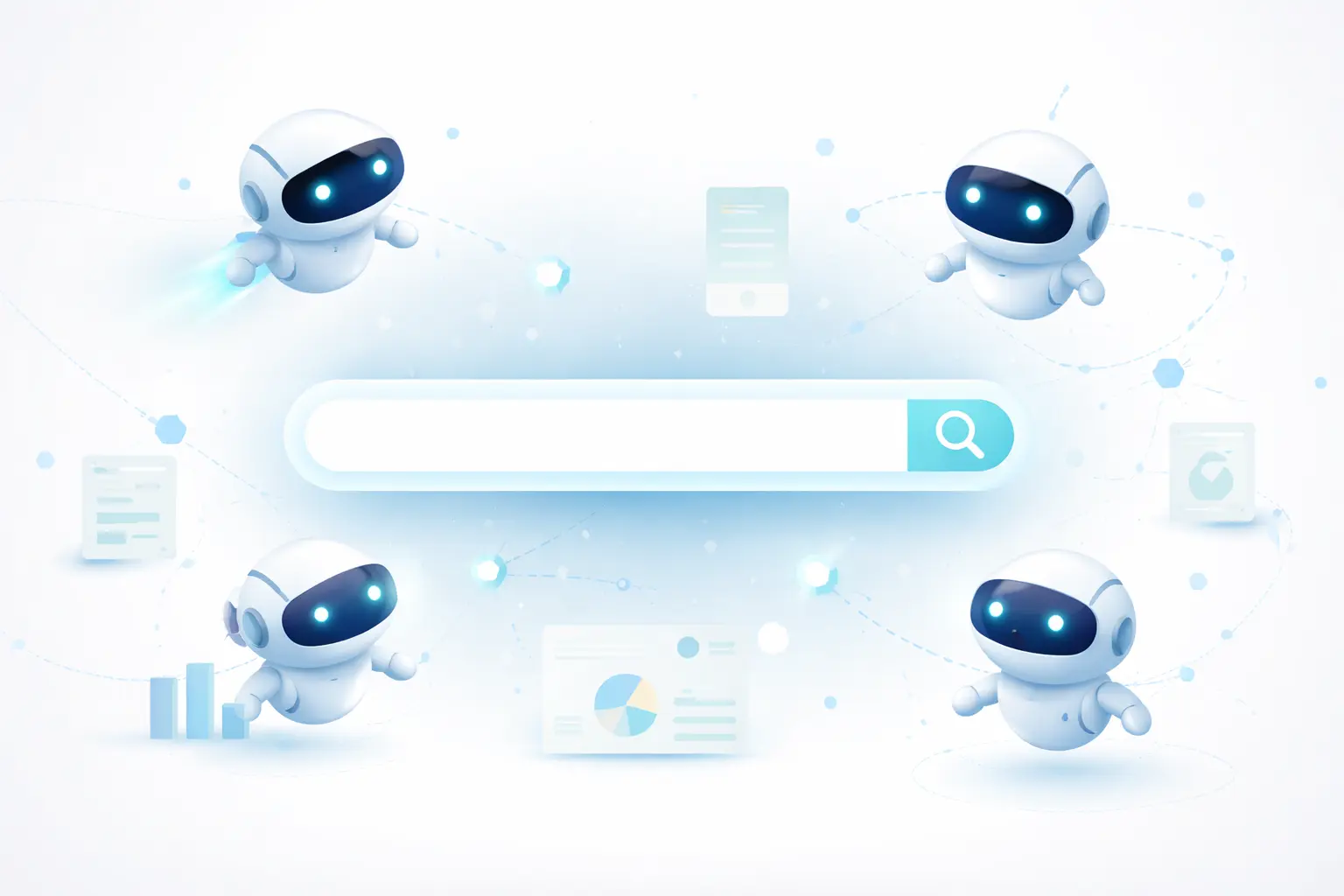
AI traffic signals are redefining how search works in 2026. Search isn’t disappearing, it’s expanding into a multi-surface discovery system where AI agents, conversational interfaces, and automated crawlers influence visibility, engagement, and brand presence. According to the latest TollBit State of the Bots Q3 & Q4 2025 data, the scale and behavior of AI agents scraping and indexing web content have reached unprecedented levels, forcing a strategic rethink of what “search visibility” means.
What marketers are seeing is not a decline in search, but a redistribution of how discovery happens.
If your strategy still optimizes only for blue links, you are measuring the wrong layer of search.
For years, we have seen that bots were treated as background noise in analytics. The model in the last two decades was that crawlers indexed pages, search engines ranked them, and humans clicked.
Now that model is breaking.
AI systems now visit pages repeatedly. They parse structured and unstructured content, while evaluating credibility, freshness, and clarity. This influences what users see without a traditional SERP click.
This means AI bot traffic is no longer passive. It is becoming a signal layer.
The report by Tollbit, and publications like TechRadar and Search Engine Land are already pointing to this transition: search isn’t collapsing, it’s stretching into conversational, assistant-led, and agent-mediated experiences.
Traditional crawlers indexed pages and moved on. AI-driven traffic behaves differently.
These systems revisit content, evaluate structure, extract answers, and reuse insights across multiple user queries. This makes AI traffic signals persistent, cumulative, and far more influential than legacy bot activity.
The TollBit State of the Bots Q3 & Q4 2025 report, which analyzed over 550 billion website visits, underscores this major structural shift:
9+ billion AI bot scrapes were detected across publisher networks.
2.9 billion scrapes bypassed robots.txt, indicating that many bots ignore traditional access controls.
Tens of billions of total visits were subject to AI bot retrieval patterns, with AI-driven access now a material portion of web traffic.
Independent reporting agrees: by Q4 2025, there was roughly one AI bot visit for every 31 human visits to a site, a dramatic increase from one bot visit per 200 human visits earlier in the year, showing how fast this trend is accelerating.
When users ask questions inside AI interfaces, the system doesn’t just “search”. It synthesizes.
That synthesis depends on:
Crawl accessibility
Topical authority
Consistent entity signals
Clear answer formatting
If your content cannot be read, summarized, and trusted by AI systems, it effectively disappears, even if rankings still exist.
Earlier TollBit analysis clearly showed that retrieval-augmented generation (RAG) bots are now the dominant driver of bot activity, exceeding traditional training crawlers. This is a strong signal that search-like retrieval usage is overtaking crawl-for-training behavior.
This aligns with broader research indicating:
Training crawlers are declining as real-time access grows.
RAG bots increasingly behave like human proxies, visiting pages with intent to extract content for summarization and answers.
To learn more about the three layers of AI Search – Read the detailed article here: Best AI strategies for 2026
It means that clicks are no longer the only proxy for visibility.
Search visibility in 2026 includes:
Presence inside AI responses
Frequency of agent retrieval
Brand mentions without attribution links
Engagement signals beyond sessions
Search is not shrinking. It’s becoming multi-surface.

With over 16 years at the forefront of strategic business growth, Sanjay Bhattacharya collaborates with CEOs and founders to reshape market positioning and drive sustainable success. Throughout his journey, he has worn many hats—from Fractional CMO for fast-growing startups to serving as Head of Marketing & Business Strategy at PRIMOTECH. He has been Featured in Under30CEO, American Marketing Association, CMO Times, CTOsync, DesignRush, Earned, HubSpot, MarketerInterview, and more.
.webp&w=32&q=75) 06 Oct 2026
06 Oct 2026