
.webp&w=48&q=75)
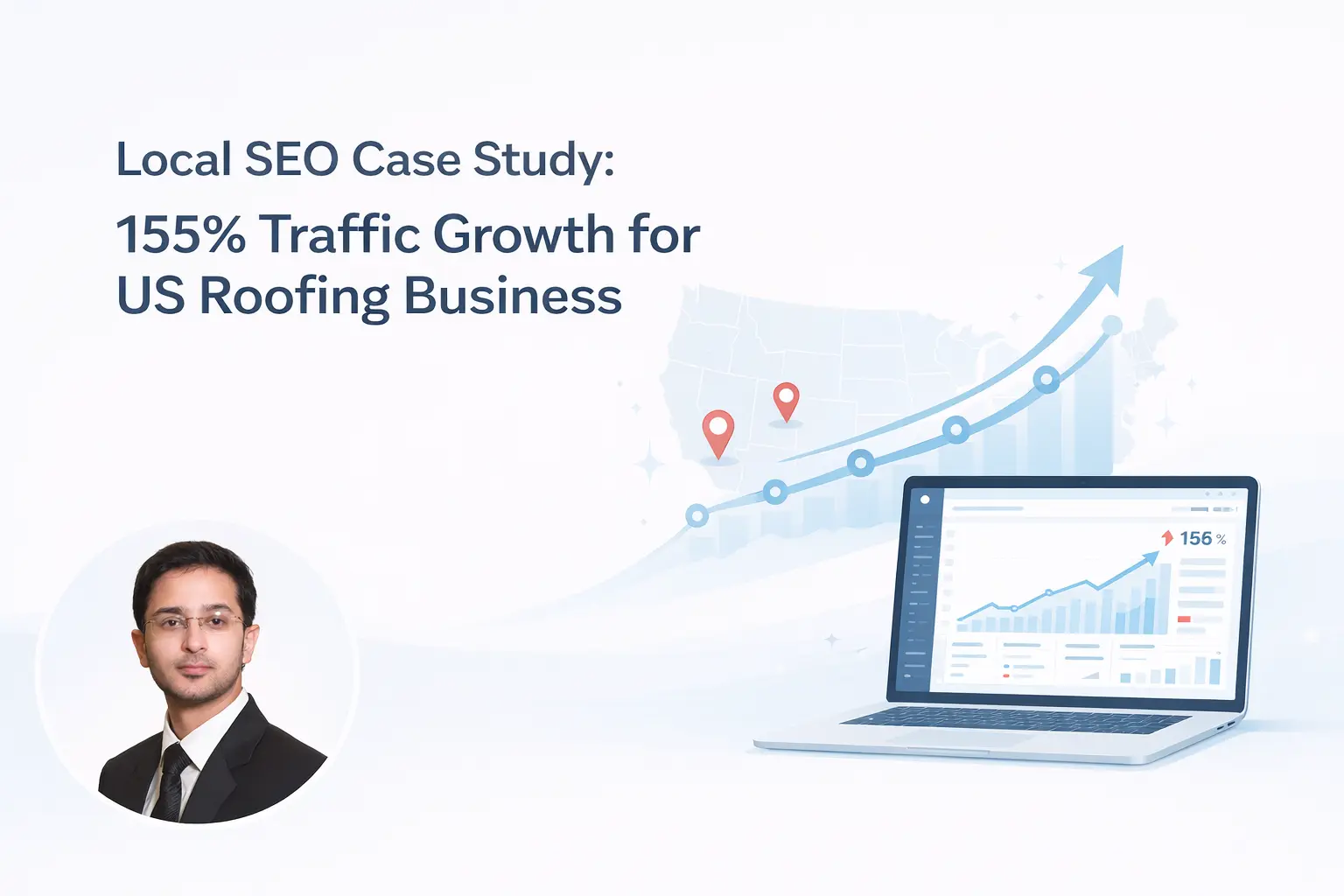
Through a structured local SEO, GMB, and engagement optimization strategy, Sanjay Bhattacharya and his team increased organic users by 155%+, improved session quality, and built a scalable lead foundation for a competitive US roofing business.
This case study breaks down the exact approach, execution model, and measurable outcomes.
Client
Industry: Residential & Commercial Roofing
Market: United States (state and city level)
Channel focus: Local SEO + Organic Growth
Campaign duration: October 2026 to February 2026
Engagement model: SanjayB Consulting with dedicated SEO team
Note: Client identity is intentionally withheld for confidentiality.
When the client approached SanjayB Consulting, the situation was typical of many US home service businesses.
They had:
Limited organic visibility in competitive roofing markets
Weak keyword presence on Google
High bounce rates
Inconsistent traffic from priority states
No scalable organic growth engine
Most importantly, traffic lacked conversion readiness.
The business needed predictable growth. Not short spikes.
At SanjayBConsulting, we align SEO with business outcomes, not vanity metrics.
Increase qualified organic traffic
Improve engagement quality
Rank for roofing service-intent keywords
Strengthen city and state visibility
Build a long-term inbound lead channel
Every action mapped back to revenue potential.
We started by fixing structural gaps that were suppressing rankings.
Local keyword mapping by state and city
Service page intent alignment
Technical SEO cleanup
Internal linking improvements
Google Business profile alignment
Location relevance strengthening
Why this mattered:
Most roofing companies compete broadly. We narrowed focus to high-intent local demand pockets.
Once the foundation was stable, we expanded keyword coverage.
Service + geo keyword clustering
Long-tail roofing queries
State-level landing page optimization
Content depth improvements
On-page semantic strengthening
This created topical authority in roofing search.
Traffic without engagement does not convert.
So we focused heavily on behavioral signals.
Pages per session
Session duration
Returning visitor behavior
Bounce rate reduction
Service page pathways
This is where most SEO campaigns fail.
Google increasingly rewards engagement-validated traffic, not just clicks.
For US local SEO, geography matters.
We strengthened signals across priority states.
State-level visibility
City relevance
User behavior by location
Regional content alignment
Service coverage depth
This improved trust with both users and Google.
The campaign delivered strong top-funnel expansion.

Users increased by 155%+
New users grew by 155%+
Sessions increased by 113%+
Overall visibility improved significantly
Strategic insight:
Growth was steady and sustainable. Not spike-driven.
Traffic quality improved alongside volume.
Returning visitors showed higher engagement
Repeat sessions increased over time
Visitor mix shifted toward high-intent users
Session depth improved meaningfully
Why this matters
These are strong indicators of:
Trust building
Brand credibility
Higher conversion probability
Positive Google ranking signals
This is where the campaign really strengthened.

Colorado drove 37.9% of users and 46.8% of sessions
Virginia achieved 5.08 pages per session
California users stayed up to 5:59 minutes per session
Georgia maintained a low 25% bounce rate
Overall pages per session reached 7.44
What this proves
The traffic was:
Location relevant
Highly engaged
Service focused
Conversion ready
We observed consistent ranking improvements.
Multiple roofing keywords climbed positions
Month-over-month visibility improved
Service-intent queries strengthened
Paid dependency reduced over time
Business impact
Higher brand discovery
More qualified inbound traffic
Long-term ranking stability
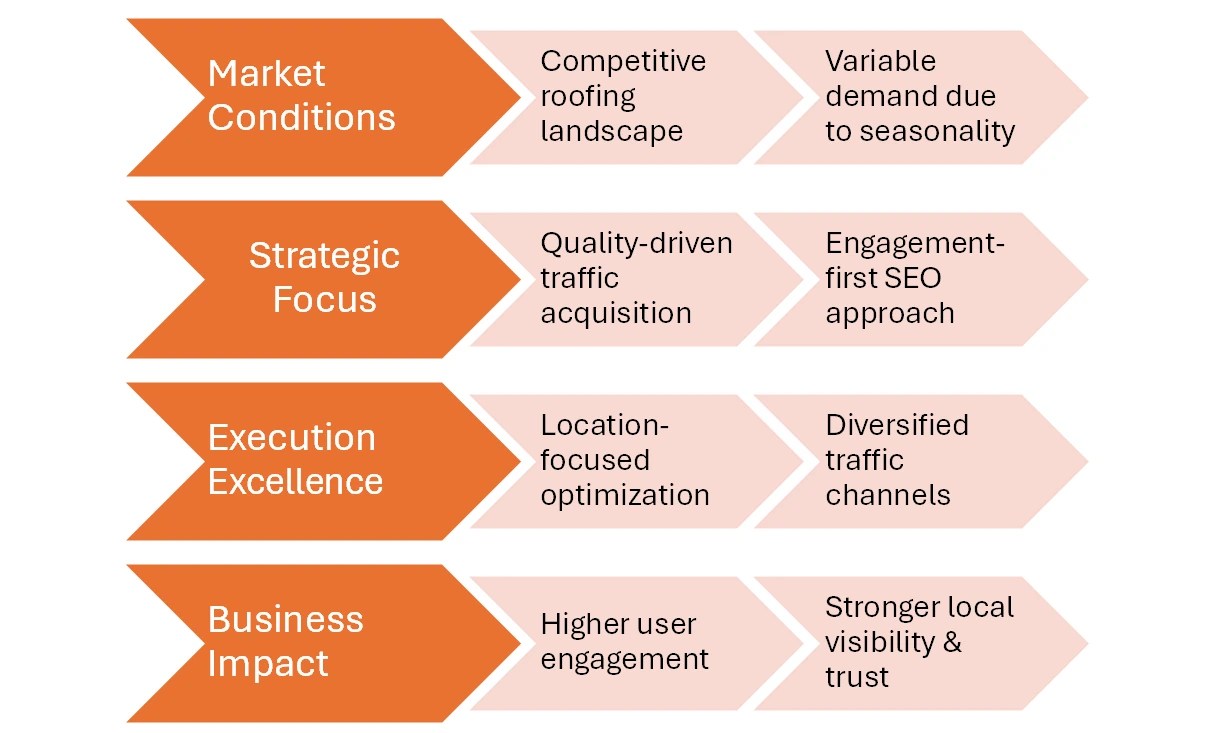
The roofing market in the US is highly competitive.
Heavy local competition
Seasonal demand fluctuations
High CPC pressure in paid search
Trust-sensitive buying behavior
Engagement-first SEO
Location-focused optimization
Intent-driven content
Diversified traffic sources
Technical consistency
Execution discipline made the difference.
If you run a local service business in the US, the takeaway is clear:
SEO works when it is:
Location intelligent
Engagement optimized
Intent aligned
Structurally sound
Consistently executed
Most agencies stop at rankings.
SanjayB Consulting focuses on revenue readiness.
Sanjay Bhattacharya is a growth-focused SEO and AI marketing strategist helping US service businesses build scalable organic lead engines.
Through SanjayBConsulting & Primotech, he works with:
Local service companies
B2B firms
Multi-location businesses
Growth-stage brands
The focus is always the same:
Predictable growth. Strong authority. Real business impact.
If your local SEO is stuck…
or your traffic is not converting…
or your rankings are unstable…
It is time for a structured approach.
Book a strategy consultation with Sanjay Bhattacharya here!
1. How long does local SEO take to show results in the US market?
Local SEO typically shows early movement within 3–4 months, but meaningful traffic and lead growth usually occurs between 6–12 months. In competitive service industries like roofing, consistent optimization and location authority building are critical for sustained results.
2. What made this local SEO campaign successful?
This campaign succeeded because of a structured approach that combined:
City and state keyword mapping
Technical SEO fixes
Engagement optimization
Location relevance strengthening
Intent-driven service pages
The focus was on conversion-ready traffic, not just rankings.
3. Is local SEO better than paid ads for service businesses?
Local SEO and paid ads serve different roles. Paid ads deliver immediate visibility, while local SEO builds a long-term, cost-efficient lead engine. For most US service businesses, the strongest growth comes from running both, with SEO reducing paid dependency over time.
4. What industries benefit most from local SEO?
Local SEO performs exceptionally well for:
Roofing companies
Home services
HVAC businesses
Plumbing companies
Legal and medical practices
Multi-location service brands
Any business targeting city or regional customers can benefit.
5. Why is engagement important for local SEO rankings?
Google increasingly evaluates user behavior signals such as:
Pages per session
Time on site
Bounce rate
Returning visitors
High engagement indicates trust and relevance, which strengthens local ranking stability and improves conversion potential.

With over 16 years at the forefront of strategic business growth, Sanjay Bhattacharya collaborates with CEOs and founders to reshape market positioning and drive sustainable success. Throughout his journey, he has worn many hats—from Fractional CMO for fast-growing startups to serving as Head of Marketing & Business Strategy at PRIMOTECH. He has been Featured in Under30CEO, American Marketing Association, CMO Times, CTOsync, DesignRush, Earned, HubSpot, MarketerInterview, and more.
.webp&w=32&q=75) 06 Oct 2026
06 Oct 2026